Why I Still Paint the Slow Classical Oil Painting Way

There are faster ways to make a painting.There are easier ways, louder ways, trend-friendly ways, I choose slow classical oil painting.
I chose none of them.
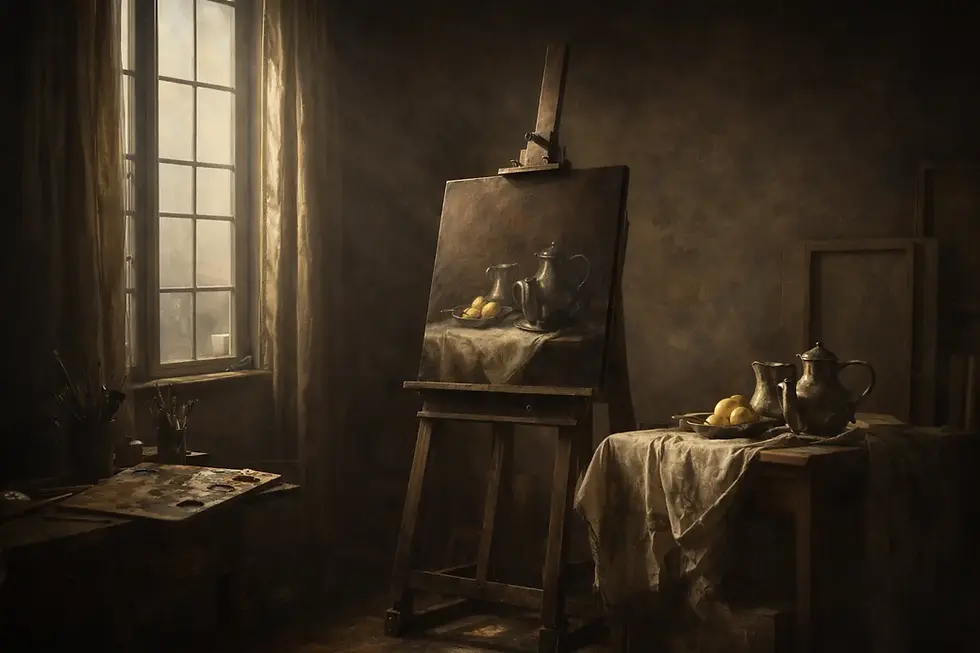
I paint slowly—not out of nostalgia, and not out of stubbornness—but because some things only reveal themselves when they are allowed to take their time.
In a slow painting, value decisions are made before color ever arrives. Structure is established long before detail is invited in. Nothing is rushed into place; everything earns its right to remain.
This way of working is older than the internet, older than modern marketing, older even than most galleries. It is a discipline shaped by patience, restraint, and quiet observation—qualities that do not announce themselves, but endure.
Slowness Is Not Hesitation
There’s a common misunderstanding that slow painting means uncertainty. In truth, it means commitment.
When I begin a painting, I am not searching—I am building. Each layer exists to support the next: an initial ground to set the tone, a careful underpainting to resolve form, restrained color to establish harmony, and finally, glazes that allow light to move through the surface rather than sit on top of it.
Nothing here is accidental. And nothing is hurried.
Speed can disguise weak decisions. Slowness exposes them—and demands they be resolved.
Why This Matters to the Finished Work
Paintings made quickly often announce themselves immediately. They impress at first glance.
Paintings made slowly tend to do something else entirely: they settle in.
They reveal themselves over time. Morning light will show you one version. Evening light, another. As the days pass, the surface grows quieter, deeper, more coherent—less about the moment of creation and more about the life it will live afterward.
Collectors often tell me this is what they notice first. Not drama. Not spectacle. But a sense of calm authority—a feeling that the painting knows exactly what it is.
That feeling is built, not improvised.
Against the Current, On Purpose
Modern culture rewards immediacy. Algorithms favor novelty. Speed is mistaken for relevance.
I work against that current deliberately.
The paintings I admire most were never meant to compete for attention. They were meant to endure—on walls, in rooms, through years of quiet living. I want my work to belong to that lineage, not the feed.
Slowness is not a limitation. It is a filter. It removes everything unnecessary until only what matters remains.
A Final Thought
The world moves quickly enough without help.
In the studio, I choose stillness. I choose patience. I choose a way of working that respects both the material and the viewer.
Some things are worth waiting for.
—From the studio of Durhl Davis
For those who enjoy living with this kind of work, the Collectors Circle offers early viewing of new paintings, quiet studio notes, and occasional reflections shared directly from the studio.
You are welcome to learn more here.


Comments